
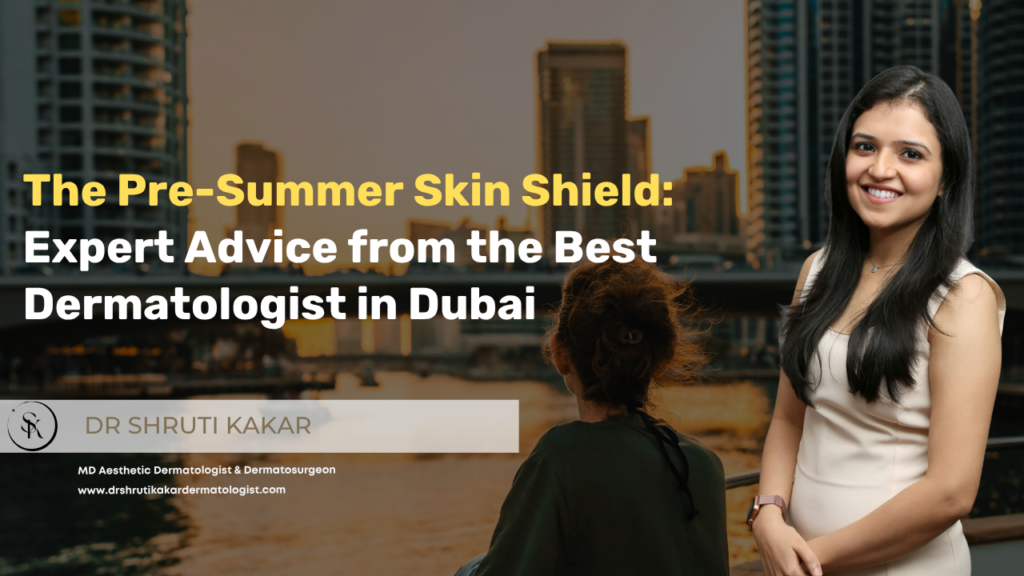
As the calendar turns to April 2026, residents across the UAE are noticing a familiar shift. The pleasant afternoon breeze is being replaced by a more intense heat, and the UV index is beginning its steady climb toward the extreme levels of May and June. In a city where the sun is both a lifestyle and a challenge, protecting your skin requires more than just a standard SPF.
To maintain a healthy, radiant complexion through the coming months, you need a professional-grade “Skin Shield.” Below, we explore how to transition your skincare routine for the Dubai heat with insights from the best dermatologist in Dubai.
Understanding the April Transition in the UAE
While April offers beautiful weather for outdoor activities, it is also a critical transition period. The combination of rising humidity and increased UV radiation can lead to a host of skin issues, including:
- Increased Sebum Production: Humidity triggers the skin to produce more oil, leading to clogged pores and “maskne” or heat rashes.
- Photosensitivity: The 2026 UV forecast suggests an early peak in radiation levels, making sun protection UAE protocols more vital than ever.
- Barrier Dehydration: High temperatures can actually pull moisture out of the skin, leaving it oily on the surface but dehydrated underneath.
Step 1: The Foundation of Sun Protection UAE
When it comes to sun protection UAE, not all sunscreens are created equal. Many over-the-counter options provide basic UVB protection but fail to shield against UVA rays, which cause premature aging and deep cellular damage.
For the Dubai climate, the best dermatologist in Dubai recommends a “layered” approach. This starts with a high-spectrum antioxidant serum (like Vitamin C or Silymarin) to neutralize free radicals generated by the sun, followed by a robust sunscreen. In 2026, the trend has shifted toward “smart sunscreens” that offer infrared protection and HEV (blue light) shielding for those spending long hours in air-conditioned offices.
Step 2: Why Medical-Grade Sunscreen is Non-Negotiable
In the extreme heat of the Middle East, a medical-grade sunscreen offers several advantages over commercial brands:
- Stability: These formulas are designed not to break down under high heat.
- Higher Concentration of Actives: They often contain physical blockers like Zinc Oxide or Titanium Dioxide that sit on top of the skin to reflect UV rays.
- Targeted Formulas: Whether you have acne-prone skin or melasma, a medical-grade sunscreen can be customized to your specific skin type without causing breakouts.
Consulting with the best dermatologist in Dubai ensures that you aren’t just buying a product, but investing in a formula that won’t clog your pores during a humid afternoon at the Dubai Marina.
Step 3: Transitioning Your Routine for Humidity
As we move into the hotter months, your “Winter” skincare—often heavy in oils and thick creams—needs to be swapped for lighter alternatives.
- Switch to Gel-Based Hydration: Replace heavy creams with hyaluronic acid-based gels. This provides the “Pre-Summer Skin Shield” without the heavy, greasy feeling.
- Gentle Exfoliation: With increased sweat and oil, dead skin cells can accumulate faster. Incorporate a gentle salicylic acid or mandelic acid wash twice a week to keep pores clear.
- Professional Pre-Summer Treatments: April is the ideal month for a [Link: Hydrafacial Treatment] or [Link: Carbon Peel] to deep-clean the pores before the extreme heat sets in.
Step 4: Managing Pigmentation and Melasma
For many in Dubai, the biggest fear of summer is the return of dark spots. Even five minutes of unprotected exposure during a walk to your car can trigger melanocytes. As the best dermatologist in Dubai, Dr. Shruti Kakar emphasizes that prevention is significantly more effective than correction.
By utilizing a medical-grade sunscreen that contains iron oxides, patients can protect themselves from visible light, which is a known trigger for melasma. If you already notice uneven skin tone, April is the last “safe” month to undergo certain [Link: Laser Skin Toning] treatments before the sun becomes too aggressive for post-treatment recovery.
The 2026 Aesthetic Trend: The "Internal" Shield
One of the biggest shifts in dermatology this year is the move toward internal photoprotection. While topical sun protection UAE remains the gold standard, we are seeing more patients supplement with Polypodium leucotomos extract—a natural fern extract that helps the skin resist burning from the inside out. However, these should always be used in conjunction with, not instead of, your medical-grade sunscreen.
Conclusion: Don't Wait for the Heatwave
Your skin’s health in July is determined by the care you provide in April. By securing a consultation with the best dermatologist in Dubai, you can create a customized “Skin Shield” that addresses your unique concerns, from anti-aging to acne prevention.
Protecting your skin in the UAE is a science, and with the right medical-grade sunscreen and professional guidance, you can enjoy the Dubai sun without compromising your glow.
FAQs About Winter Skin Reset
Winter skincare in Dubai requires a unique approach because the climate remains relatively warm with low humidity, unlike typical cold winters elsewhere. The combination of mild outdoor temperatures and aggressive indoor air conditioning creates moisture loss without the extreme cold. Dubai residents need lighter yet deeply hydrating products that won’t feel heavy in warm weather while still protecting against significant humidity drops and continued UV exposure.
You don’t need to overhaul everything, but key adjustments make a significant difference. Focus on upgrading your moisturizer to a richer formula, ensuring consistent SPF use, and adding hydrating serums. Keep your cleanser gentle and consider incorporating weekly hydrating masks. The goal is enhancing moisture retention while maintaining protection, not completely replacing products that work well for you.
Persistent dryness can compromise your skin barrier, leading to increased sensitivity, premature aging, and vulnerability to environmental damage. When your skin barrier is weakened, you may experience more breakouts, inflammation, and deeper wrinkles over time. Addressing dryness promptly with appropriate hydration and barrier-repair products prevents these long-term concerns and maintains skin health.
The most effective winter moisturizers contain humectants like hyaluronic acid and glycerin that draw moisture into skin, emollients like ceramides and fatty acids that smooth and soften, and occlusives like squalane or dimethicone that seal in hydration. Niacinamide is excellent for strengthening the skin barrier, while peptides support skin repair and renewal during winter months.
Absolutely. Dubai’s UV index remains moderate to high even in winter months, ranging from 5 to 7 on average. UVA rays, which cause aging and skin damage, penetrate clouds and remain consistent year-round. Skipping SPF in winter leads to cumulative sun damage, hyperpigmentation, and accelerated aging. Daily broad-spectrum SPF 30 or higher is non-negotiable regardless of season.
Limit exfoliation to once or twice weekly during winter to avoid compromising your moisture barrier. Choose gentle chemical exfoliants with lactic acid or mandelic acid rather than harsh physical scrubs. Over-exfoliating during winter strips protective oils and worsens dryness. If your skin feels tight or irritated, reduce exfoliation frequency and focus on hydration instead.
Consult a dermatologist in Dubai if you experience persistent dryness despite using appropriate moisturizers, sudden sensitivity or reactions to previously tolerated products, worsening eczema or psoriasis, stubborn acne breakouts, or visible changes in skin texture or tone. Professional treatments and prescription products can address concerns that over-the-counter options cannot resolve effectively.